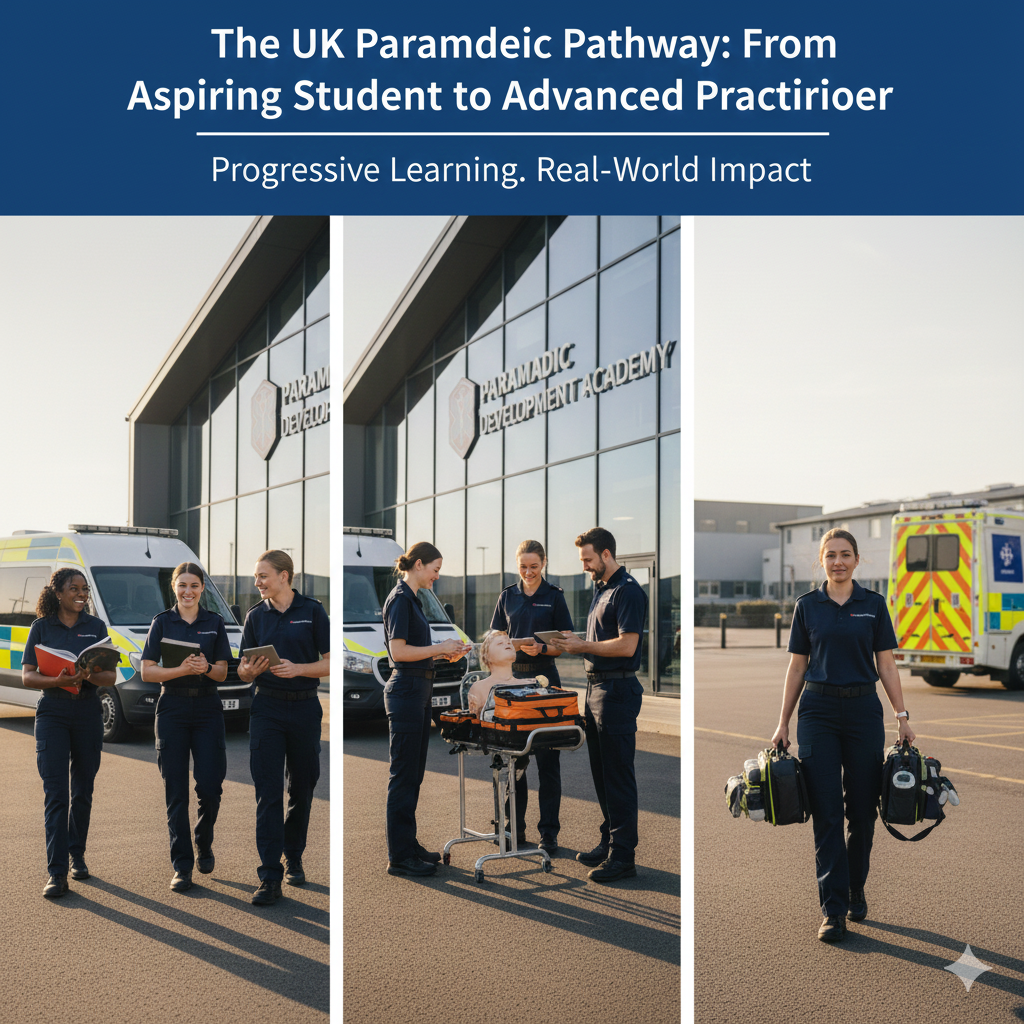
Becoming a paramedic in the UK is a rewarding and structured career journey that blends academic learning, hands-on clinical experience, and professional registration. Whether you’re just finishing school or looking to advance your existing healthcare career, understanding the pathway is essential. Below is a clear, step-by-step guide to help you plan your route.
1. Know the Role of a Paramedic
A paramedic is a healthcare professional trained to provide urgent treatment and care in emergency situations — from responding to 999 calls, assessing patients on scene, to making critical decisions in transport and hand-over care. To practise legally in the UK, paramedics must be registered with the Health and Care Professions Council (HCPC), meeting their standards of proficiency. The HCPC
🔗 HCPC Paramedic Standards: https://www.hcpc-uk.org/standards/standards-of-proficiency/paramedics/
2. Entry Routes into Paramedicine
A. Full-Time Degree in Paramedic Science / Practice
The most direct route for many is to study an approved degree (usually BSc Hons) in Paramedic Science or Paramedic Practice at a UK university. These courses combine classroom study with practical placements in ambulance services and healthcare settings. Upon graduation, you can apply for HCPC registration and begin your career as a newly qualified paramedic. College of Paramedics+1
🔗 Example Degree (St George’s, University of London): https://www.citystgeorges.ac.uk/prospective-students/courses/undergraduate/paramedic-science
Many universities work in partnership with NHS ambulance services to give students real clinical experience and support throughout their training. London Ambulance Service
B. Degree Apprenticeship / Student Paramedic Roles
You can also train while you work through a Paramedic Degree Apprenticeship with an NHS ambulance trust. As a student paramedic, you’ll earn a salary while completing your degree, including classroom learning, practical placements, and assessments. WMAS University+1
🔗 Example: Paramedic Degree Apprenticeship with SWAST: https://www.swast.nhs.uk/paramedic-apprenticeship/
This route is increasingly popular and helps remove some financial barriers by integrating training with employment.
C. Bridging Roles (Support Worker → Paramedic)
For those without immediate access to a degree place, entry-level roles such as Ambulance Support Worker (ASW) or Associate Ambulance Practitioner (AAP) offer a practical way into the ambulance service. With experience and additional training, you can progress into a Paramedic Degree Apprenticeship or university programme. YAS NHS
3. Gaining Registration & Early Career
Once you complete your degree or apprenticeship:
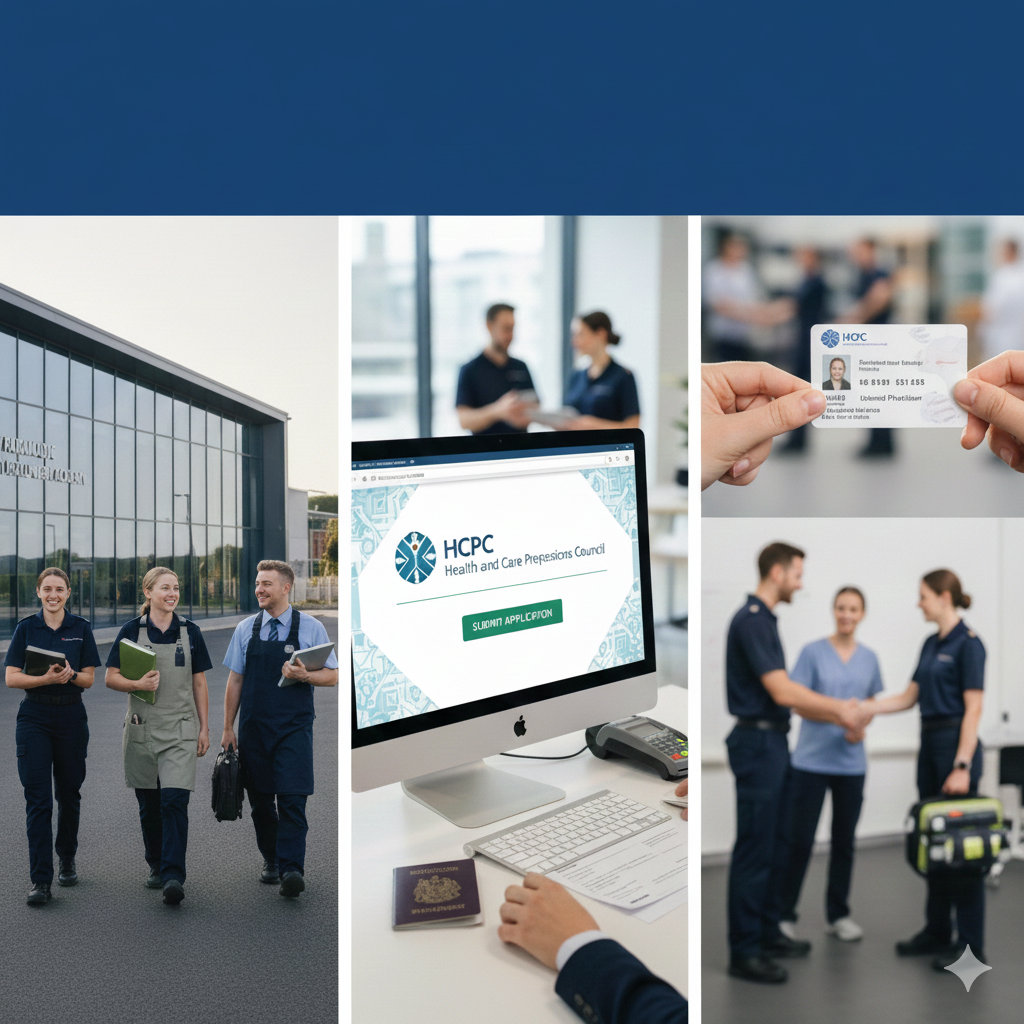
✔ Apply for HCPC registration — mandatory to practise. The HCPC
✔ Begin working as a Newly Qualified Paramedic (NQP) typically within an ambulance service, urgent care, NHS community roles or private emergency services. National Careers Service
Working as a registered paramedic builds your clinical experience and helps you refine decision-making, patient assessment and emergency care skills in real practice.
4. Career Progression Pathways
As your experience grows, there are several routes you can take:
A. Specialist & Advanced Roles
After gaining experience (often 3–5+ years), you can specialise or move into advanced practice. Advanced Paramedic Practitioners have additional education — usually a master’s degree (MSc) — and can work more autonomously across settings such as urgent care, critical care, primary care, or advanced clinical teams. NWAS – North West Ambulance Service+1
🔗 MSc Advanced Paramedic Practice (University of Hertfordshire): https://www.herts.ac.uk/courses/postgraduate-masters/msc-advanced-paramedic-practice2
Roles may include:
- Advanced Paramedic Practitioner (APP)
- Critical care specialist
- Urgent care practitioner
- Community paramedic
- Emergency care practitioner
In many of these roles, you’ll take on expanded clinical responsibilities—including enhanced assessment, treatment pathways and potentially prescribing rights. London Ambulance Service
B. Leadership, Education & Research
Paramedics can also grow into educational roles, research, management, and clinical leadership. The College of Paramedics’ Career Framework outlines continued professional growth across clinical practice, leadership, education and research pillars. College of Paramedics
5. Continuous Development & Special Interests
Paramedics in the UK are encouraged to continue learning throughout their careers with continuing professional development (CPD) and additional qualifications. This helps maintain competence, expand scope of practice and stay aligned with the latest clinical standards.
🔗 College of Paramedics: https://collegeofparamedics.co.uk/
6. Overseas Trained Paramedics
If you trained overseas, you can still work in the UK, but you must demonstrate your qualifications meet the HCPC’s standards of proficiency and potentially complete additional training or assessments. Reddit
Summary: UK Paramedic Career Roadmap
- School / GCSEs & A-levels (ideally including science subjects)
- Choose training route
- Full-time Paramedic Science degree
- Paramedic degree apprenticeship
- Work-based roles leading into paramedic training
- Complete training & HCPC registration
- Work as a registered paramedic
- Progress to specialist, advanced, leadership or educational roles
Each stage combines education, practical experience, and professional registration, offering a structured but flexible career pathway for those committed to saving lives and supporting community health in urgent and emergency care.